
Should you purchase a used gun?

By MARJ LAW
Today I’m talking about buying a gun. Recently, a newbie asked me if she should save some money and buy a used gun from someone she met. My first reaction is “No!” When you are just learning about guns, you won’t know what to look for.
My first suggestion is to buy from a local gun store. They often sell used guns, so you can save some money. They will be honest and offer recommendations because they want to preserve their reputation and they will want your continued business.
If you do decide to look at a used gun, bring along a knowledgeable friend to help you. These are some of the things you both should look for:
Conclusion: These are several suggestions to consider when a person new to shooting decides to purchase a used handgun. It reminds me of a slogan from a jeweler that said: “if you don’t know your jewelry, make sure you know your jeweler.” I’d say the same of handguns: “If you don’t know enough about handguns, be sure to know your gun store personnel.” We have local gun shops where new and used guns are sold.
They want your business and your repeat business, and will treat you honestly.
An empty gun: The seller should always jack the slide and show you that there is no ammunition in his gun. In a gun store, the sales person should do this as well. Showing that the gun is empty is a safety measure for both parties.
Condition: Look at the overall condition of the firearm. Heavy wear is a red flag. Reconsider purchasing.
Many guns are coated with “bluing.” This is a dark blue/black finish. Check all the levers and buttons. Has the bluing worn off? Do you see gray metal instead of bluing? Check the end of the muzzle. Has the bluing worn off here?
Jack the slide: Does the slide move easily? Will you be able to operate it yourself?
Previous care: Take a strong light and look in the chamber. Is this area clean? Do you see any greyish glop in here? That’s shooting residue. It shows someone has not cleaned the gun.
Do you see reddish-brown spots in here? Those spots are rust. You don’t want a rusty gun. This is another indication that the gun was not maintained well.
Ask the owner to demonstrate field-stripping the gun. Use your strong light to see that the inside of the barrel and that the rifling is shiny. Again, look for signs of rust.
If you see the grey glop or reddish-brown markings inside or out, reconsider buying from the person who has not taken care of his gun.
Look on the inside of the revolver: If the gun is a revolver, push the cylinder out. Use your strong light and check every one of the chambers to look for dirt or rust.
Timing: Again, if the gun is a revolver, push the cylinder back in place. Rotate the cylinder until you feel it lock. Is the chamber aligned perfectly with the barrel?
Now, cock the hammer. When you cock the hammer, the cylinder should lock to the next chamber. This is called timing. If it doesn’t rotate, lock in position and align with the next chamber, you have a problem with timing. Timing is critical in a revolver. Don’t buy.
Dry firing: If the gun you’re looking at is a center-fired gun, ask the seller if you may “dry fire.” This is when you have made sure that there is no ammunition at all in the gun. At this point, you can jack the slide and pull the trigger. Is the trigger hard to pull? Does it “travel” a long distance?
Let’s get real here. If the trigger is hard to pull or hurts your finger, you won’t practice with the gun. If you don’t practice, then when you must use it, you might not be able to deal with the gun’s action.
If you are looking at a rim-fired gun, do not try to dry fire. Dry firing a rim-fired gun can damage or break the firing pin.
Magazine: Do you have a problem inserting the magazine in the grip? When you press the magazine release button, does the magazine fall freely from the gun? If not, the magazine(s) may be old and/or damaged. The gun may not operate in future use. Also, since powder residue from shooting drops into the magazine well, make sure the magazine well is adequately clean.
Caliber on the gun and on the magazine: Check that the caliber of the gun is shown on the outside of the slide, and that this is the caliber you want. In most guns today, magazines also have the caliber stamped on them. Make sure the magazine shows the same caliber as the gun. In the case of revolvers, the caliber is stamped on the barrel.
Concealed carry permit: If you decide to sell or buy, ask to see the person’s concealed carry permit. This shows that at the time of issuing the permit, the buyer was not a felon and has indeed passed a background check. It also shows where the person resided and that he was of legal age when he purchased the firearm.
What information to keep: If you decide to purchase (or sell), this is the information you want to write down: the serial number of the gun, date of transaction, seller’s full name, and buyer’s full name. Both parties should sign the document. Each person should have an original signed copy.
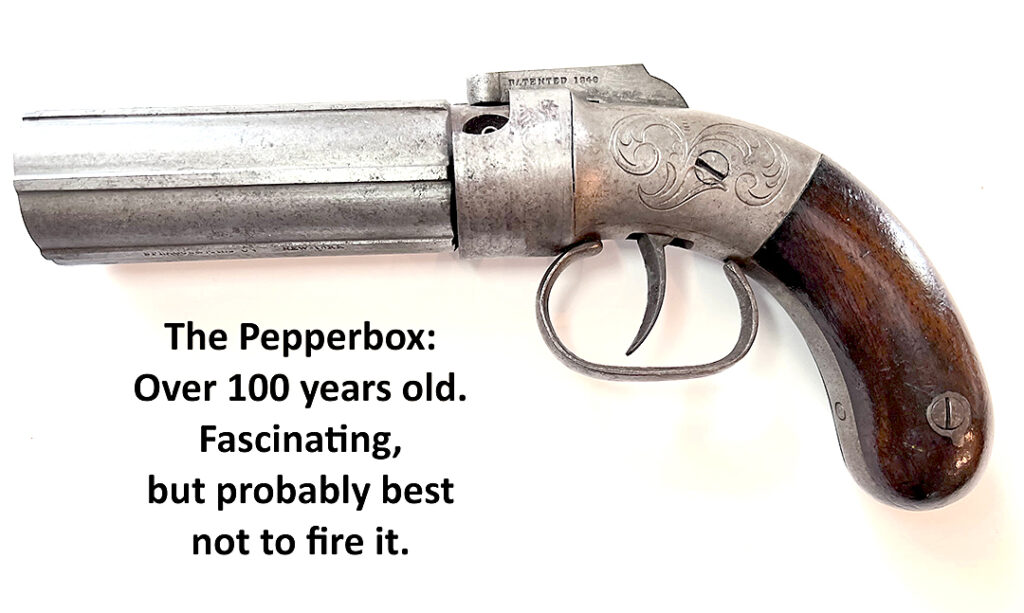
Antique, imports and military surplus: bring knowledgeable person with you. It might not be an actual firearm, and it could be unsafe to fire.
Ammunition: Buy the correct ammunition for your gun. If you are shooting to make holes in a target or are just learning, you don’t need to buy expensive defensive loads. Full metal jacket ammo is fine. If you are purchasing for defense, then you may want to buy the hollow point or other defensive load. Check your owner’s manual to see what type of defensive ammunition this gun is able to handle.
Owner’s manual: Ask the seller if he has the Owner’s Manual. This will tell you how to handle the gun safely. It will give you the parts of the gun. It will tell you how to break it down and clean it. It will inform you as to the type of ammunition is best for the gun. If the seller does not have the original manual, you can usually find it on the internet. You can copy the information and make your own manual.
Try before buy: What caliber can you handle? Go to a place that rents gun, and do what you can to shoot the caliber and gun you find most comfortable. If you have the opportunity to shoot many handguns of similar caliber, do so, because every gun behaves differently.
Yes, it can be expensive to pay to try out many guns. But it’s worse to buy a gun, take it to the range, and then decide you don’t like it.
Marj Law is the former director of Keep Wakulla County Beautiful who has become an avid shooter in retirement.